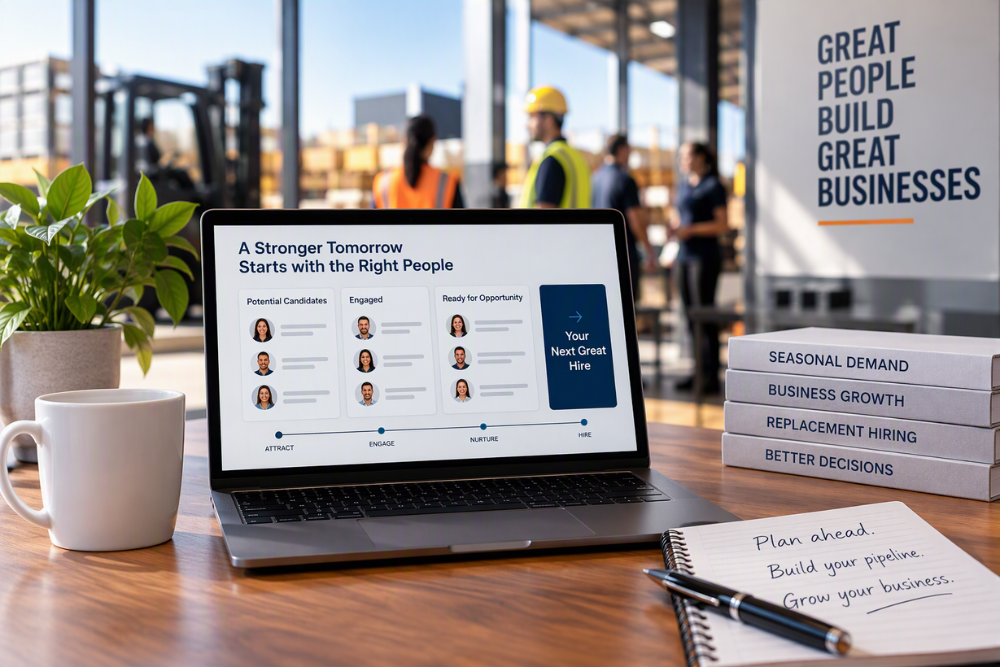
Why Building a Candidate Pipeline Matters for Business Success
The best time to find your next employee is before you need them. Building a candidate pipeline gives your business access to potential candidates before a vacancy arises, helping you recruit faster, respond to changing workforce needs and make more considered hiring decisions.
Rather than starting from scratch each time someone resigns, demand increases or a new contract is secured, employers can proactively identify and stay connected with suitable people whose skills align with future workforce needs.
A strong candidate pipeline might include previous applicants, temporary workers, employee referrals, active job seekers and industry professionals who may be open to future opportunities. By building these relationships early, businesses can reduce hiring pressure and move more quickly when the need arises.
In this article, we explore how candidate pipelines can support seasonal demand, business growth and replacement hiring, and how FindStaff can help employers build a more proactive recruitment strategy.
What Is a Candidate Pipeline?
A candidate pipeline is an ongoing pool of potential candidates who have already expressed interest in working with your organisation or whose skills align with future workforce needs.
Rather than starting every recruitment process from scratch, businesses build relationships with suitable candidates and stay in contact until opportunities arise.
A strong pipeline can include active job seekers, previously interviewed candidates, temporary workers, referrals, and industry professionals who may be open to new opportunities in the future.
The goal is simple: reduce the time and effort required to find quality candidates when a position needs to be filled.
Preparing for Seasonal Demand
Many industries experience predictable fluctuations in workforce demand throughout the year.
Manufacturing businesses may require additional workers to meet production peaks. Warehousing and logistics operations often experience increased demand during holiday periods. Construction and infrastructure projects can create workforce requirements that rise quickly as projects commence.
Employers who identify potential candidates early can secure talent sooner and avoid competing with other businesses for the same workers.
Building a candidate pipeline allows organisations to move quickly when demand increases, helping maintain productivity and minimise disruption.
Supporting Business Growth
Growth is positive, but it can place pressure on recruitment processes.
Whether you’re expanding into new markets, opening additional sites, or securing new contracts, workforce capability needs to keep pace with business ambitions.
Organisations with an established talent pipeline recruit faster because they already know which candidates could support future expansion.
Proactive workforce planning helps ensure recruitment supports growth rather than becoming a barrier to it.
Having access to qualified candidates provides greater confidence when pursuing new opportunities. It also helps ensure workforce capability is available to support future expansion.
Managing Replacement Hiring
Not every vacancy can be predicted, but employee turnover is a reality for every business.
When a valued employee resigns unexpectedly, employers often face the challenge of maintaining operations while recruiting a replacement.
Without a candidate pipeline, recruitment can become rushed. This increases the risk of poor hiring decisions or extended vacancies.
Maintaining a pool of suitable candidates reduces this pressure. Employers can often begin conversations with pre-qualified candidates immediately, leading to faster shortlisting and a more efficient hiring process.
This allows businesses to focus on selecting the right candidate rather than scrambling to find available candidates.
Faster Shortlisting, Better Decisions
One of the biggest advantages of a candidate pipeline is speed.
Sourcing candidates, reviewing applications, and conducting initial screening can take considerable time, particularly when specialised skills are required.
When employers already have access to a network of suitable talent, much of this work has already been completed.
Recruitment teams can quickly present shortlisted candidates. They have already assessed their skills, experience, and availability. This helps hiring managers move through the recruitment process more efficiently.
Importantly, faster recruitment does not need to mean lower standards. Proactive hiring gives businesses more time to focus on finding the right fit for the role, the team, and the organisation’s long-term goals.
How FindStaff Helps
Building and maintaining a quality talent pipeline takes time and ongoing market engagement. That’s where FindStaff can help!
With more than 25 years of recruitment experience and a strong national network of candidates across industries including manufacturing, transport and logistics, construction, engineering, and government, FindStaff helps employers access skilled talent before workforce needs become urgent.
Our team works closely with employers to understand workforce requirements, identify future hiring needs, and build recruitment strategies that support long-term business success.
We engage candidates year-round and proactively source talent. This helps organisations reduce hiring pressure and respond quickly when opportunities or challenges arise.
Recruitment Is Easier When You Plan Ahead
The best time to start building a candidate pipeline isn’t when you have a vacancy. It’s before you need one.
Whether you’re preparing for seasonal demand, planning for growth, or safeguarding against unexpected turnover, a proactive approach to talent sourcing can help ensure the right people are available when your business needs them most.
Frequently Asked Questions
What is a candidate pipeline?
A candidate pipeline is a pool of potential candidates whose skills and experience may suit your organisation’s current or future workforce needs. It can include active job seekers, previous applicants, temporary workers, employee referrals and industry professionals who may be open to future opportunities.
Why is building a candidate pipeline important?
Building a candidate pipeline can help businesses reduce hiring pressure and respond more quickly when workforce needs change. By identifying potential candidates before a vacancy arises, employers can spend less time starting the recruitment process from scratch and more time finding the right person for the role.
When should businesses start building a candidate pipeline?
The best time to start building a candidate pipeline is before you have an immediate vacancy. Planning ahead can help businesses prepare for seasonal demand, future growth, new contracts and unexpected employee turnover.
How do you build a strong candidate pipeline?
Start by identifying the roles and skills your business is likely to need in the future. From there, you can maintain relationships with suitable previous applicants, temporary workers, referrals, active job seekers and other industry professionals. Regular engagement helps keep potential candidates connected to your organisation until the right opportunity becomes available.
How can a recruitment agency help build a candidate pipeline?
A recruitment agency can help businesses identify future workforce needs, continuously engage with the candidate market and source people with relevant skills before recruitment becomes urgent. FindStaff engages candidates year-round and works with employers to develop recruitment strategies that support their future workforce requirements.